Hey Gotcha: A Playful Sans Serif for Handmade Brand Identity
I remember staring at a blank brand board last Tuesday, trying to find the right personality for a local bakery that wanted to move away from stiff, corporate imagery. They needed something that felt warm, approachable, and distinctly handmade. That was when I opened Hey Gotcha. It wasn't just another decorative typeface in my library; it felt like an immediate solution. As a designer who spends most of their day tweaking kerning and adjusting weight balances, finding a font that genuinely captures a playful mood without sacrificing structural integrity is rare. This Sans Serif font immediately brought a sense of joy to the project.
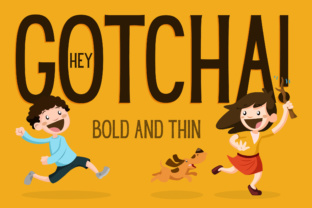
The moment I placed Hey Gotcha on the logo concept draft, the vibe shifted instantly. The letterforms have a distinct bounce to them, mimicking the imperfections of hand-lettering while maintaining the clean lines of a modern typeface. What stands out most about this creative font is its versatility in weights. The bold version has enough presence to anchor a primary logo, while the thin variant offers a delicate touch perfect for subheadings or elegant product descriptions. But the real game-changer was the shadow layer included in the file set. In a previous project for a children's clothing line, I found that adding that subtle drop shadow created depth without needing complex graphic design software. It gave the text a tactile, sticker-like quality that resonated perfectly with the target audience.
Testing Hey Gotcha Across Real Design Assets
To truly understand if a font works for a client, you have to put it through the wringer. I didn't just look at the letters in isolation; I tested Hey Gotcha across a full suite of design assets. Starting with packaging design, I mocked up a label for a boutique skincare brand targeting younger consumers. The rounded edges of the characters softened the overall aesthetic, making the product feel organic and friendly rather than clinical. On a physical mockup, the font held up well even at smaller sizes, provided it was used as a headline or accent rather than body copy.
Moving to digital platforms, I applied the font to a website header and social media graphics. For web design, using a display font can be risky regarding readability, but Hey Gotcha strikes a balance that is hard to find. The open counters and clear spacing ensure that short phrases remain legible even on mobile screens. When I created a series of Instagram posts for a creative studio identity, the font's playful nature helped break up the monotony of standard layouts. It acted as a visual hook, drawing the eye immediately to the message. However, I did notice that for long-form content, such as an editorial design piece or a blog post, the font became too distracting. It is clearly best utilized as a display font, headline font, or logo font where impact matters more than volume.
I also experimented with business cards and flyers. The combination of the bold and thin styles allowed me to create a strong visual hierarchy. Using the bold weight for the company name and the thin style for contact details created a sophisticated contrast that felt intentional. The shadow layer added a nice dimension to printed cards, making them stand out in a stack. Yet, there are limitations. If you are designing for a formal corporate environment or need to convey serious authority, this commercial font might not align with your brand perception. It simply does not carry the gravity required for legal documents or high-end financial branding.
Pairing Strategies and Technical Considerations
One of the most critical aspects of working with a fun and playful font is knowing how to pair it correctly. Since Hey Gotcha is a Sans Serif with a handwritten aesthetic, it pairs exceptionally well with a classic serif font to ground the design. Imagine using a sturdy, traditional serif for body text to provide readability, while letting Hey Gotcha shine in the headlines. Alternatively, pairing it with a clean, geometric sans serif can create a modern typography system that feels fresh and contemporary. For projects leaning heavily into the "handmade" theme, combining it with a script font can enhance the artisanal feel, though one must be careful not to let the two compete for attention.
From a technical standpoint, the file set includes various weights and the unique shadow layer, which saves significant time during the production phase. Designers often worry about multilingual support, but it is always wise to check the specific character set before committing to a global campaign. The inclusion of ligatures or swashes, if available, can add further customization options for brand identity work. For those looking to use this on the web, ensuring the availability of webfont formats is crucial for performance. Most modern browsers handle these types of custom fonts well, but testing loading times on different devices is a necessary step.
Before integrating this font into final client work, I recommend running a few quick tests. Try setting it in all caps versus lowercase to see how the personality shifts. Experiment with the shadow layer at different opacities to ensure it doesn't muddy the text color. Remember that while Hey Gotcha is excellent for kids and children designs, it also finds a home in youth-oriented lifestyle brands, craft shops, and creative agencies. Its ability to mimic a handmade look makes it a powerful tool for small business owners who want to project authenticity.
Practical Advice for Implementation
If you are considering this font for a large-scale project, keep in mind that it excels as a supporting typeface for short phrases rather than a paragraph filler. Use it to create recognition and engagement in marketing materials, posters, and flyers. The playful mood it conveys can significantly influence how an audience perceives a brand, often lowering barriers and inviting interaction. Just be sure to review the commercial font licensing terms carefully. Whether you are creating templates, merchandise, or print-on-demand products, understanding the usage rights will protect both you and your clients. Ultimately, Hey Gotcha is a versatile addition to any designer's toolkit, offering a blend of charm and structure that is difficult to replicate with generic options.